


Defibrillators can save lives, but only if they are working. - Amanda Hack MP
- Over 120,000 defibrillators in the UK are registered on The Circuit, but without regular checks, some devices may not be ready to use when they are needed most. More than 81,000 Guardians are responsible for maintaining these devices.
- In North West Leicestershire alone, 224 defibrillators are currently registered on The Circuit, serving a population of around 104,000.
- For every minute without CPR or defibrillation, survival chances fall by 10%.
Amanda Hack MP has backed Resuscitation Council UK’s (RCUK) Check Your Defib Week campaign, calling on defibrillator Guardians across North West Leicestershire to ensure life-saving devices are registered, regularly checked and kept up to date on The Circuit.
Defibrillators can save lives, but only if they are working. Early CPR and defibrillation can more than double survival rates following a cardiac arrest. Damaged shock pads, flat batteries or missing parts can prevent a device from delivering a life-saving shock. Checking a device takes only a few minutes, but failing to check it and update its status on The Circuit could have serious consequences.
That is why RCUK has launched Check Your Defib Week (15–21 June), a UK-wide public health campaign encouraging Guardians to ensure their devices are registered, checked and updated on The Circuit. Keeping records up to date allows ambulance services and members of the public to know whether a defibrillator is ready to use and available to help save a life.
Cardiac arrest is the most time-critical medical emergency. For every minute without CPR or defibrillation, a person’s chance of survival falls sharply by around 10%.
More than 40,000 out-of-hospital cardiac arrests occur across the UK every year. Although fewer than one in ten people survive, rapid intervention and access to a rescue-ready defibrillator can dramatically improve outcomes, underlining the importance of ensuring every device is maintained and accessible.
RCUK has developed a practical checklist to support Guardians in carrying out routine checks and ensuring devices remain fully operational. This includes confirming pads are sealed and in date, batteries are charged and status indicators show the device is ready for use.
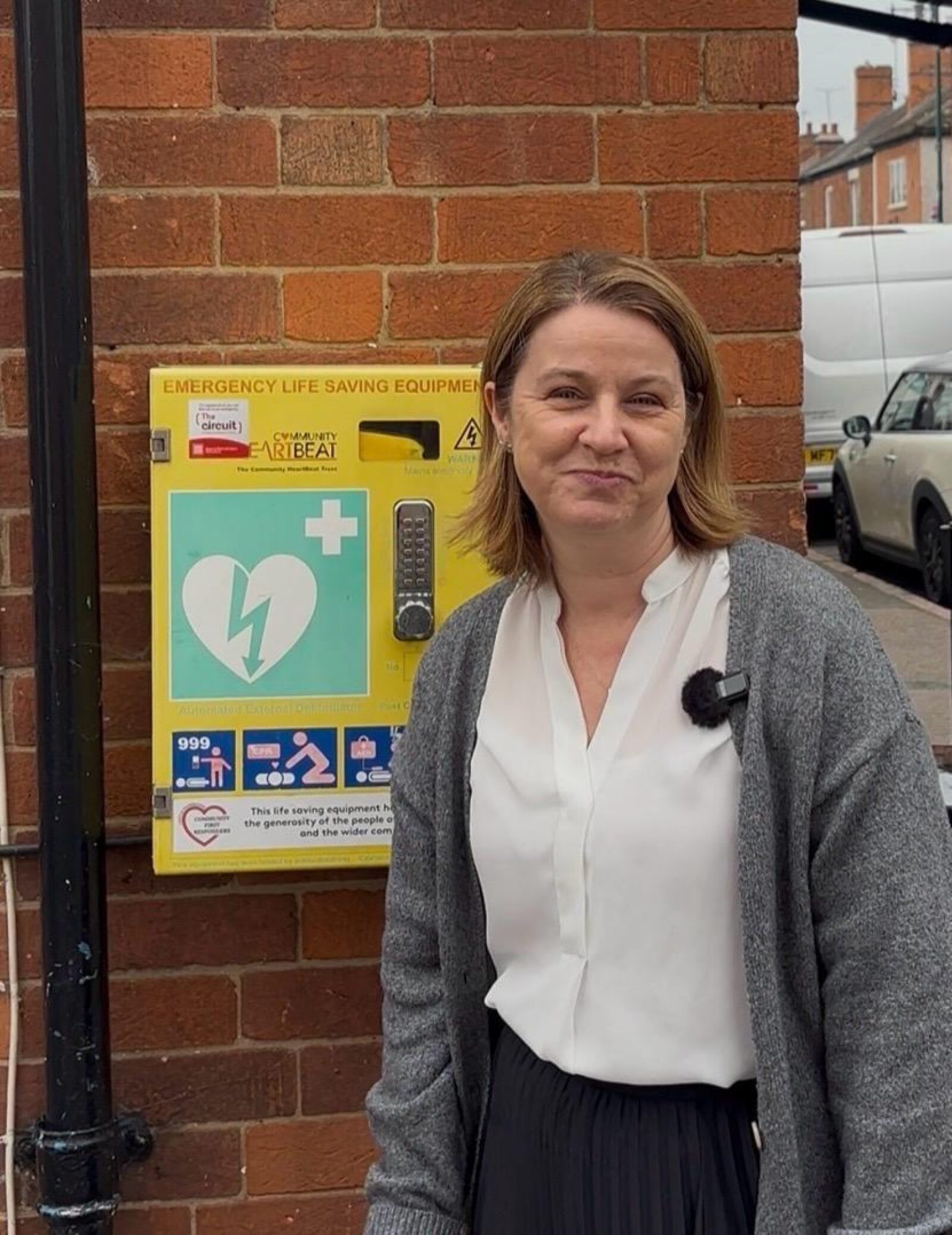
Amanda Hack MP for North West Leicestershire said:
“Locally, around 224 defibrillators are registered on The Circuit. Last year, we ran the Defib Dash campaign, encouraging people across North West Leicestershire to locate their nearest defibrillator, check it was registered and ensure it was in working order. Through that campaign, we identified a number of devices that had temporarily gone offline while awaiting replacement pads or other maintenance before they could be brought back into service.
I am pleased to support Resuscitation Council UK’s Check Your Defib Week, which shines a spotlight on the importance of these life-saving devices and the vital role Guardians play in ensuring they are checked regularly, properly maintained and ready to use in an emergency.
I would encourage all defibrillator Guardians to take a few minutes to check their device and ensure its details are up to date on The Circuit. It is a simple action that could make a real difference and help save lives when every second counts.”
Adam Benson Clarke, Clinical Director at Resuscitation Council UK, said:
“Defibrillators can make the difference between life and death, but only if they are properly maintained and accessible. Too many devices risk failing at a critical moment due to simple issues like expired pads or flat batteries. By taking just a few minutes to check and update defibrillators on The Circuit, Guardians can play a direct role in improving survival from cardiac arrest.”